


Hey folks, it’s Dan the Price Man here, your dedicated source for insightful political analysis with a fresh Gen Z perspective.
As an aspiring future politician committed to fostering real change, I urge you to subscribe to my email list and follow me on YouTube, TikTok, and X.com for ongoing discussions and updates.
Today we’re addressing a critical and urgent matter: the Senate and House Republicans MUST develop a fucking SPINE, as Democrats appear more inclined to resort to violence.
I hate this diplomatic passive stance that has allowed threats to escalate unchecked, and as a young individual deeply invested in our nation’s future political engagement,
I view this as a profound failure to confront dangers that threaten our democratic foundations.
This issue resonates personally with me, shaping my vision for a resilient America where we stand firm against aggression.
Join me as we delve deeply into this topic, linking it to wider societal implications, sharing my candid views, and culminating in a robust call to action that demands immediate involvement from all of us.
To fully grasp the urgency of this discussion, let’s outline the core elements at play. The central concern revolves around the perceived lack of fortitude among
Republican members in the Senate and House when confronting opponents who increasingly favor violent tactics over peaceful dialogue.
This isn’t merely theoretical; it’s embedded in the escalating political environment where intimidation, explicit threats, and even assassinations have become distressingly commonplace.
Seriously, THERE HAVE BEEN ACCOUNTS OF FRAUD BEING SEEN AND WITNESSED, AND YET, NOTHING!

Republicans, historically the advocates for robust national security and adherence to law and order, are expected to resist adversaries both at home and abroad with determination.
However, recent patterns reveal that diplomatic initiatives are frequently sabotaged by counterparts who capitalize on perceived vulnerabilities, employing inflammatory language that spirals into calls for violence.
The mechanics of this involve a spectrum of actions, from orchestrated social media campaigns that incite public unrest to procedural obstructions in legislation that compel confrontations instead of collaborative solutions.
As of today, the landscape shows a Congress where Republicans maintain majorities in both chambers post the 2024 elections, yet factional disputes and external aggressions have fostered a climate of hesitation.

Public sentiment is polarized; surveys indicate mounting dissatisfaction among conservative constituents who believe their elected officials

The reception varies, with some praising cautious approaches to avoid escalation, while others decry it as cowardice that invites further aggression.
Delving into the mechanics, when traditional diplomatic channels falter, adversaries may escalate to personal attacks such as doxxing, sustained harassment, or physical violence, as documented in numerous cases.
The intended outcome is to suppress dissent and consolidate influence, but the real-world impact has been a deeply divided nation with eroding confidence in democratic institutions.
Potential drawbacks include a surge in political violence, evidenced by rising threats against lawmakers, which could precipitate a complete erosion of civil discourse.
Conversely, should Republicans cultivate greater resolve, the advantages might encompass more effective policy implementation, enhanced national security measures, and a reestablishment of leverage in negotiations.
Supporting data underscores this:
Reports from security agencies note that threats directed at members of Congress have skyrocketed by over 400% since 2016, predominantly targeting Republicans from diverse sources including ideological extremists.
Expert analyses from think tanks and security professionals caution that without a decisive response, these trends could evolve into systemic instability, potentially mirroring historical periods of heightened political turmoil.
Furthermore, the economic ramifications cannot be overlooked.
A Congress paralyzed by fear diverts resources from productive legislation to security enhancements, straining budgets and delaying critical reforms in areas like healthcare and infrastructure.
On the benefits side, a resolute stance could foster bipartisan respect, encouraging more constructive debates and yielding policies that benefit the broader populace.
Key organizations shaping this narrative include activist groups across the spectrum, such as far-right militias or left-leaning protest networks.
Their activities, including demonstrations that devolve into riots, compel Republicans into reactive postures, undermining proactive governance.
Private sectors also exert influence; major technology firms have been accused of suppressing conservative viewpoints.
While financial institutions have engaged in de-banking based on political affiliations, fostering an environment hostile to diplomatic resolutions.
This parallels global instances where corporate actions, such as payment restrictions in contentious debates, escalate tensions rather than alleviate them.
Expanding on this, consider how in countries like India or Brazil, political violence has been exacerbated by social media amplification, leading to targeted assassinations of public figures.
These comparisons highlight the universal risk of unchecked aggression and the necessity for legislative bodies to assert authority decisively to preserve order.
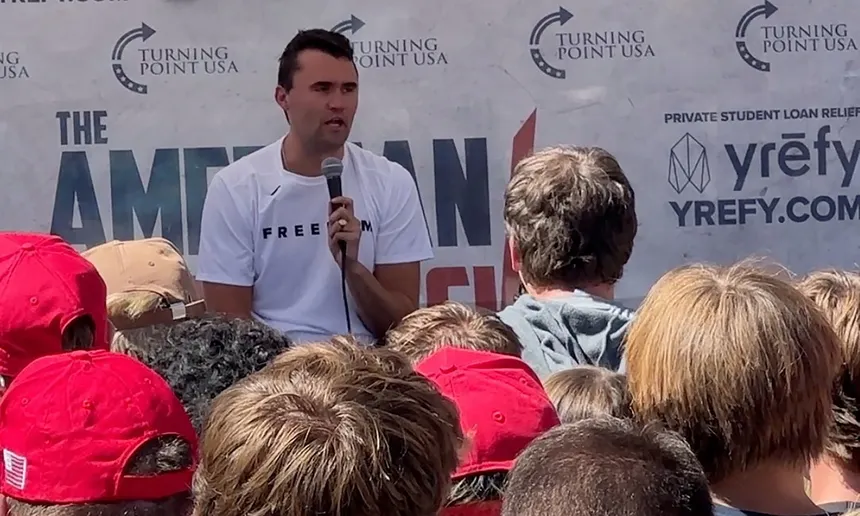
A pivotal event that underscores this urgency is the assassination of Charlie Kirk on September 11, 2025, at Utah Valley University, carried out by Tyler Robinson in what authorities describe as a politically motivated attack.

This tragic incident should have served as a stark wake-up call for Republicans, highlighting that Democrats don’t care about playing fair since 2013!
Yet, distressingly, congressional Republicans have responded with cowardice, failing to enact meaningful reforms or heighten security measures, allowing the cycle of threats to persist unchecked.
In the preceding months, additional assassination attempts, including those on former President Trump, have compounded the crisis.
For instance, on September 15, 2025, another attempt on Trump at his golf club in Florida further illustrated the escalating dangers.
These events are not isolated; they form a pattern linked to inflammatory rhetoric and inadequate responses from leadership.
Looking back to the week of July 7-13, 2025, public outrage surged following data breaches and proposed legislation aimed at curbing online threats, yet these efforts only deepened divisions.
Real-time insights from X posts reveal lawmakers and commentators urging Republicans to adopt “spines of steel” against destructive tactics, with specific calls to crush violent agendas.
Posts also connect Kirk’s assassination to broader political violence, criticizing the lack of decisive action.
Recent retirements among House Republicans, driven by death threats and internal chaos, further exemplify the cowardice in not confronting these issues head-on.
Over 10% of Congress members are opting not to return in 2026, citing safety concerns and partisan infighting.
In November 2025, the aftermath of Kirk’s death led to a purge affecting over 600 individuals in pro-Trump crackdowns, highlighting retaliatory measures but also the ongoing failure to prevent such violence preemptively.
Researchers warn of a rising ‘assassination culture,’ linking Kirk’s murder to other high-profile killings and calling for systemic changes that Republicans have been slow to champion.
Now, let’s shift to a more personal lens. This situation is fucking stupid!
I’ve navigated virtual worlds where strategy demands boldness against overwhelming odds, and seeing real-world leaders falter in the face of threats feels like a betrayal of those principles.
The assassination of Charlie Kirk, a prominent conservative voice, should have galvanized Republicans into action, yet their cowardly inaction, leaves me disheartened and motivated to advocate for change.
I’ve witnessed how unchecked aggression in discussions led to personal attacks, teaching me the value of standing firm.
Kirk’s death, motivated by political hatred, exemplifies enemies who prefer elimination over negotiation, and Republicans’ lack of response only emboldens such behavior.
I support a tougher stance rooted in proactive legislation, increased funding for lawmaker security, and public campaigns to denounce violence.
Concerns about overreach are legitimate, but inaction invites greater peril.
The cowardice displayed post-Kirk’s assassination undermines trust and perpetuates vulnerability.
It’s time for Republicans to heed this wake-up call and act decisively.



Leave a Reply